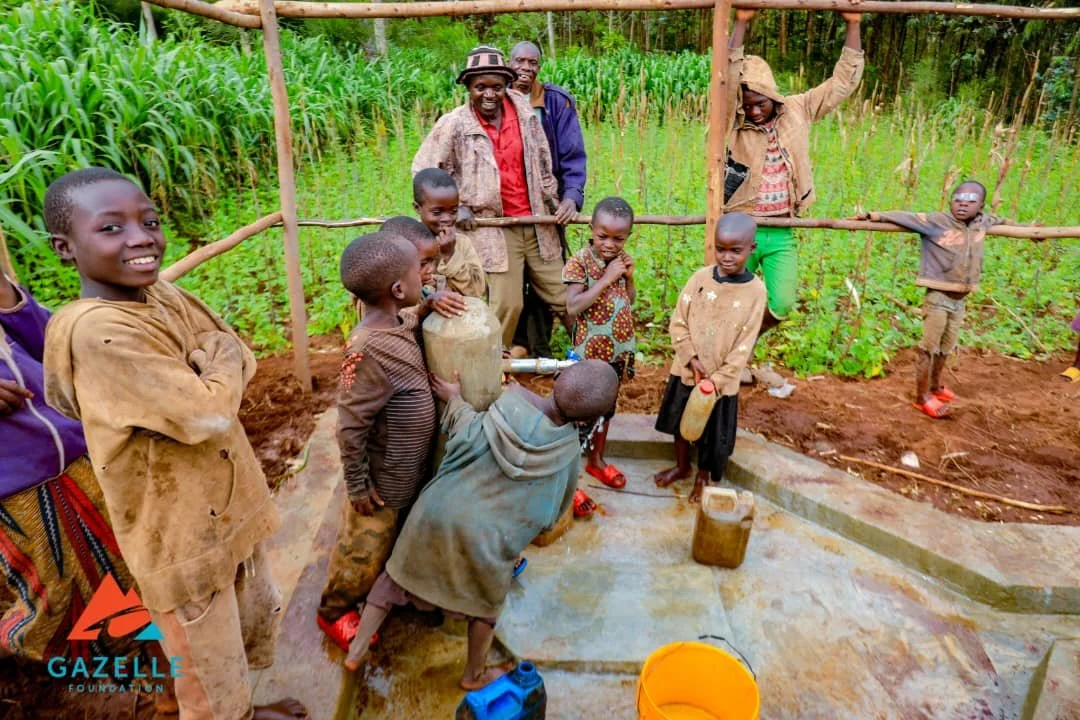
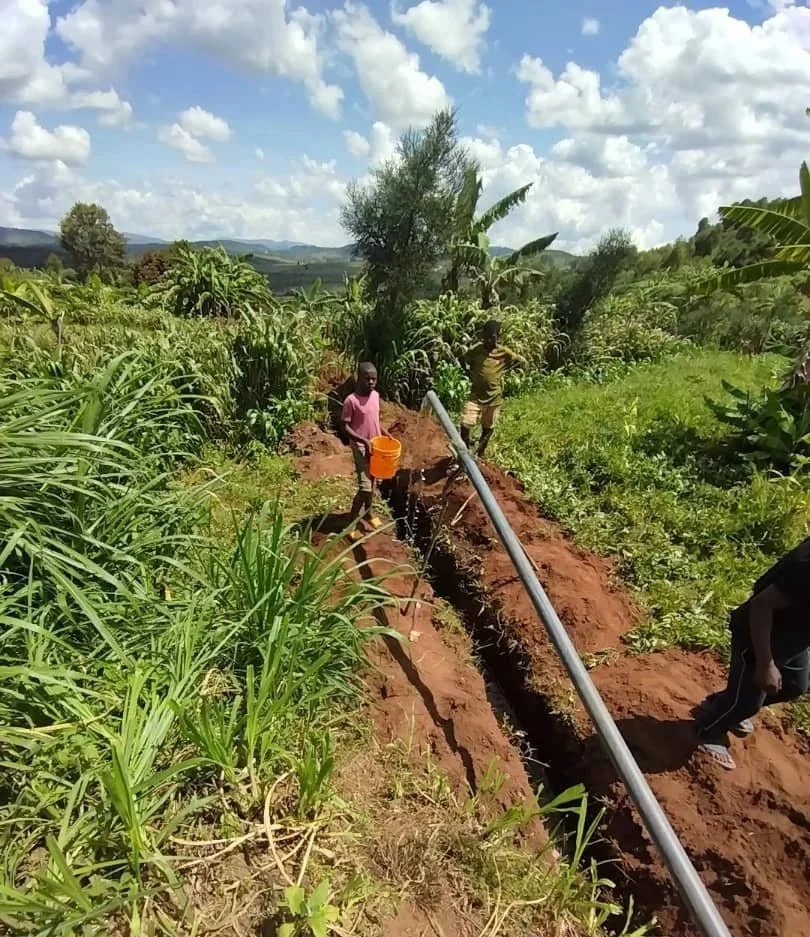
Rebuilt the right waY—engineered for long-term durability, and built using locally available materials and expertise—so clean water flows close to home for generations.
In Burundi, construction is underway on a water system designed to do something essential: deliver clean water, consistently.
This project is a renovation and expansion of an existing system originally built by another entity. Over time, that system began to fail, not because the need disappeared, but because the engineering was inadequate.
We’re addressing that at the source.
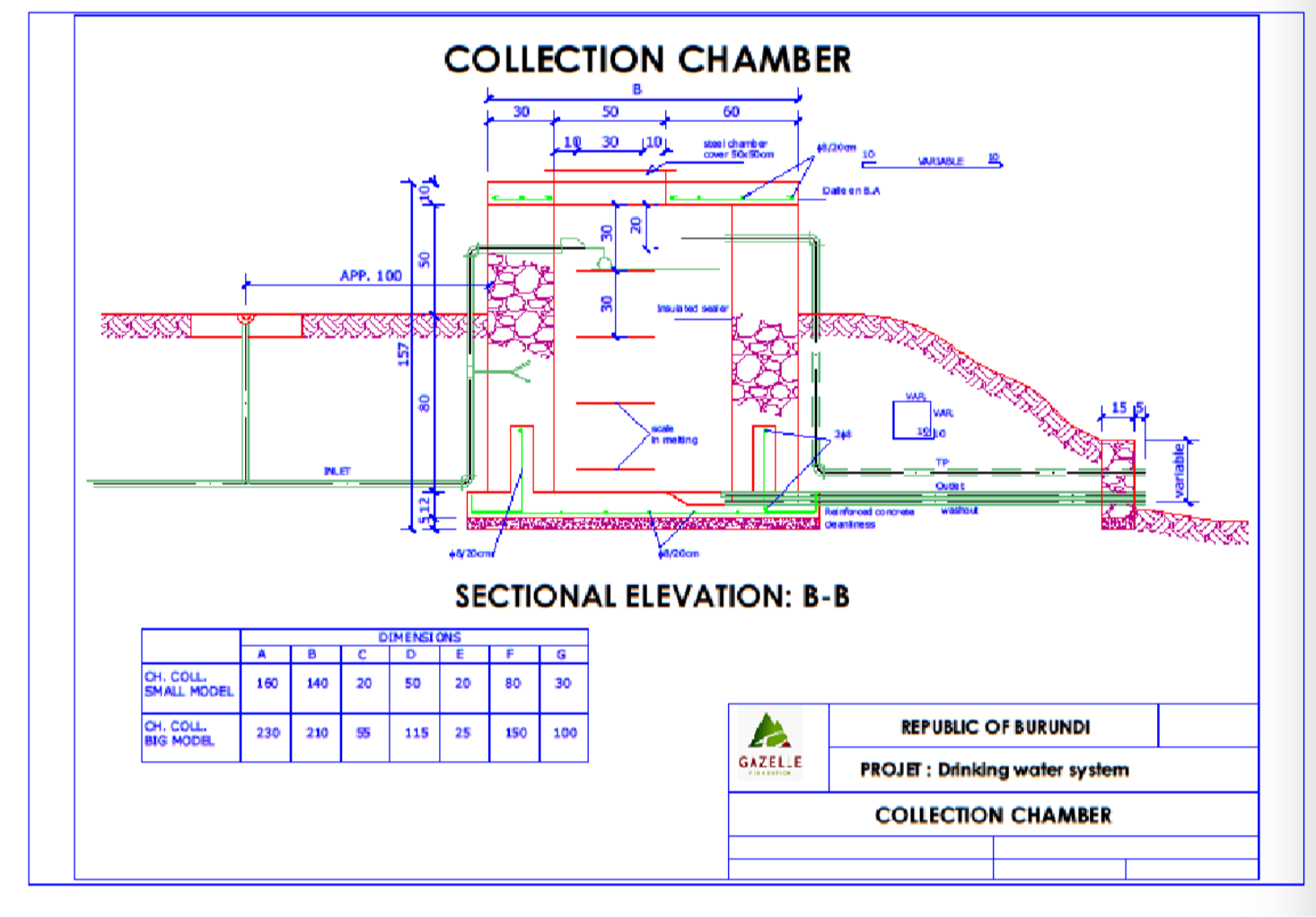
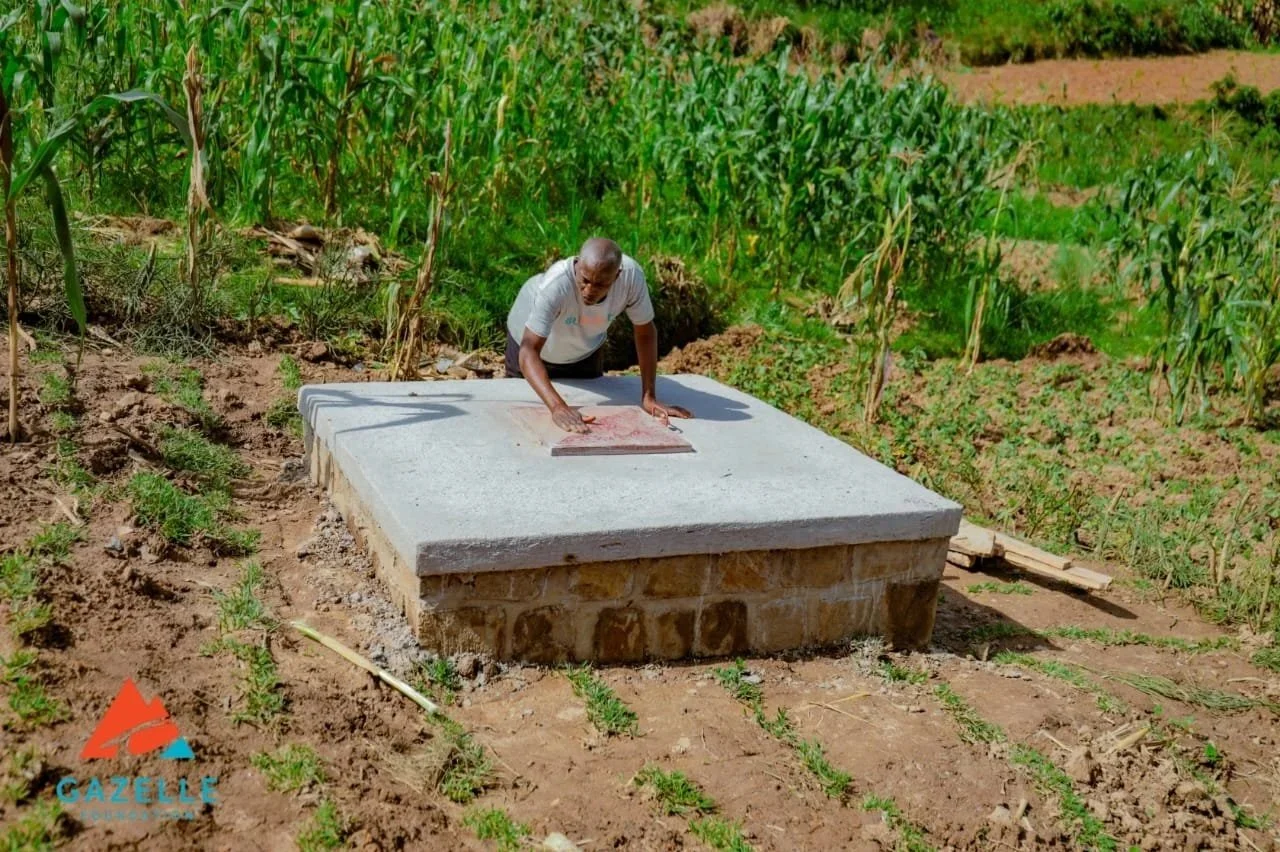
Left: Schematic diagram of a spring-fed collection chamber, where clean water is captured and directed into a gravity-fed system. Right: A completed collection chamber from another Gazelle Foundation water system, showing how this design translates into real-world construction.
Engineering That Holds Up
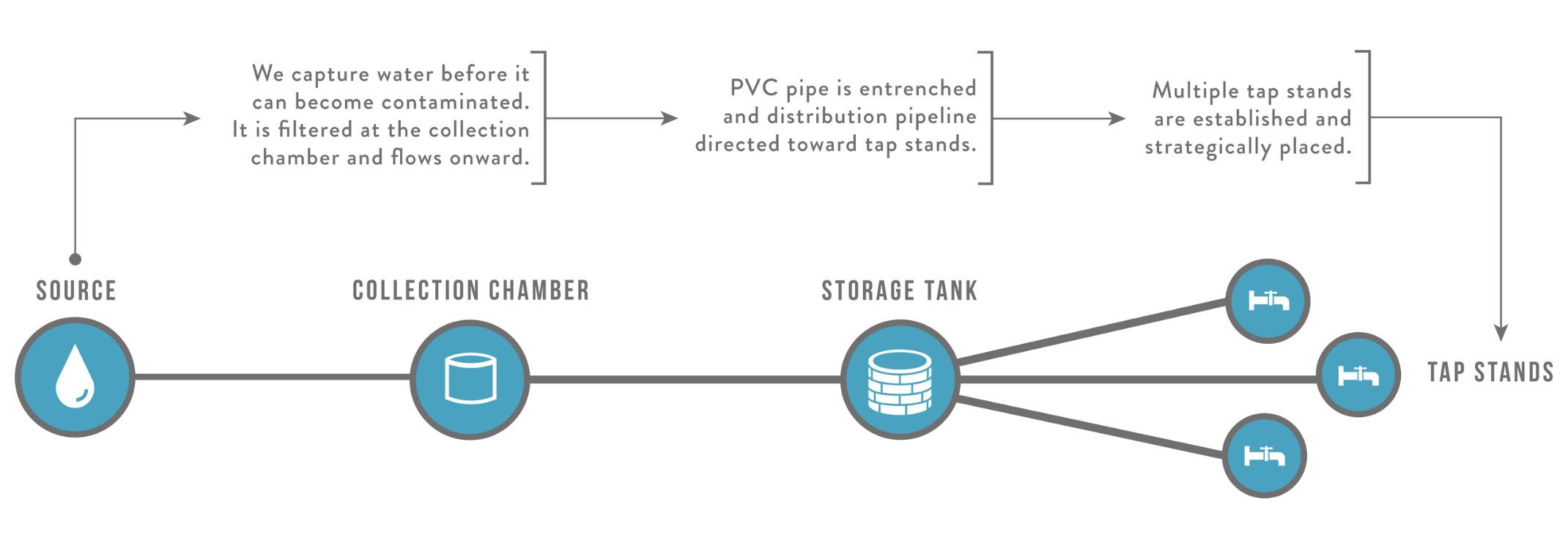
A new collection chamber is being built at a protected spring, selected to provide a consistent water supply, with a flow rate of 2 liters per second. From there, water will move through a gravity-fed pipeline system—delivering clean water without the need for electricity or mechanical pumping.
A new storage tank is also being constructed to regulate that supply, maintaining consistent water availability throughout the system during seasonal changes and periods of high use at tap stands.
Before completion, we run water through the entire system—across 9 miles of pipeline and 21 tap stands—to confirm everything is working as it should.
The water system is intentionally low-tech. That’s what makes it dependable.
Fewer moving parts mean fewer points of failure—and in rural communities, that consistency matters.
Want to understand how systems like this are designed to last? Explore the 7 steps behind how we build water systems.
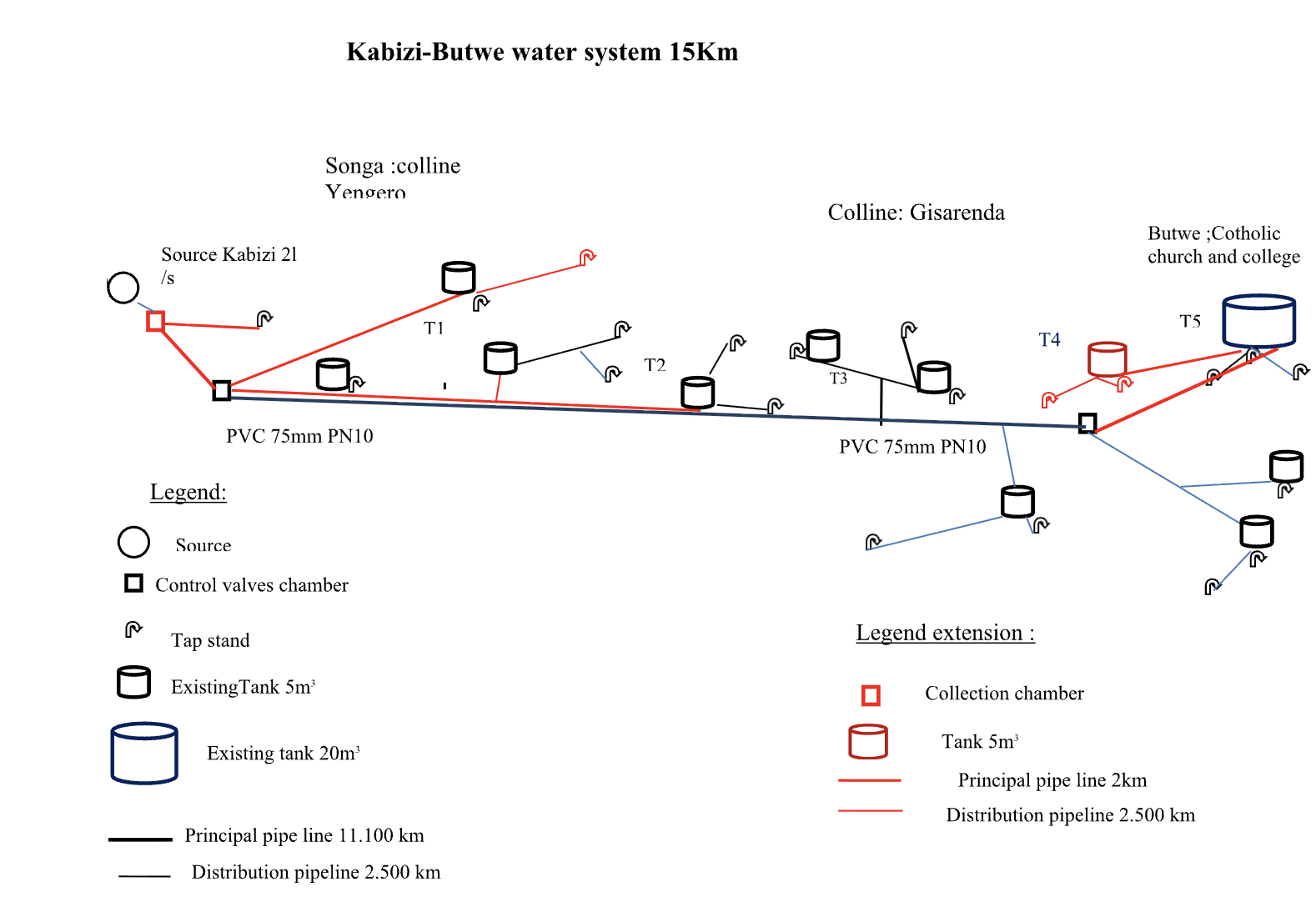
Items shown in red indicate new construction; items in black represent existing infrastructure. All existing infrastructure will be inspected, refurbished, and tested to ensure proper function.
Central to the renovation and extension of this system is the addition of an adequate water source and collection chamber to support overall capacity. The new storage tank will play a key role in regulating and distributing water in the system.
The schematic includes the distribution pipeline, storage tanks, collection chamber, and tap stands.
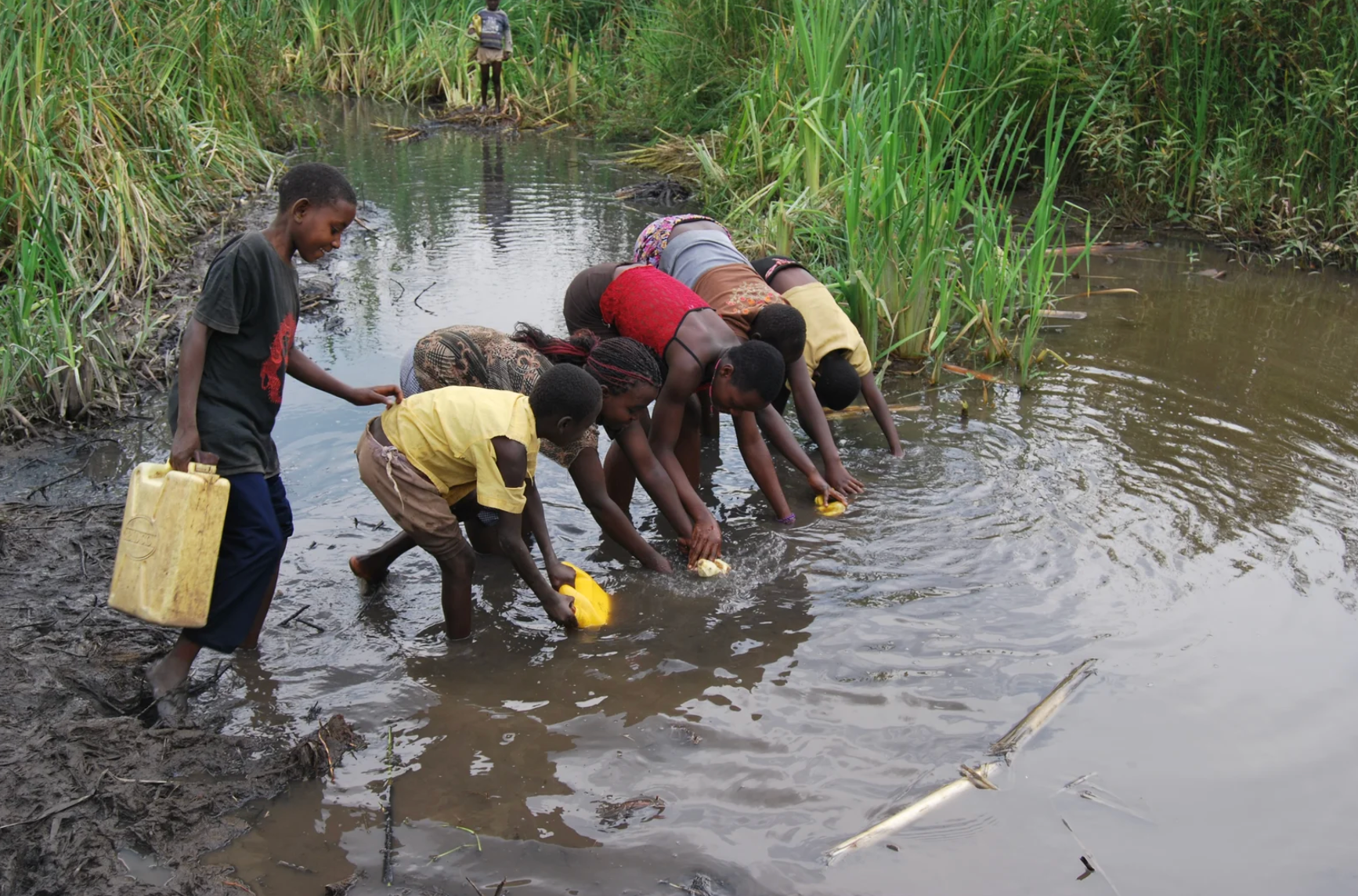
Children gathering water from a murky river, a contaminated source that poses serious health risks.
From Miles Walked to Water Nearby
Today, families in this community walk miles each day to collect water—often from unsafe sources.
When this system is complete, clean water will be available close to home for 4,500 people, including a local college and church.
That shift—from distance to access—is what this work is about.
Built by the Community
Just as important as how the system is engineered is how it’s built.
The Gazelle Foundation hires local residents to construct every water system. Masons, plumbers, and laborers from the community are part of the process from start to finish—learning how the system works in practice.
That knowledge stays in the community.
So when maintenance is needed—or repairs are required—the people who built the system are the ones who can sustain it. This is what allows the system to keep functioning long after construction is complete.
Once construction is complete, the system is formally handed over to the community. From that point forward, it belongs to them, and they take on responsibility for maintaining and protecting it. That ownership is what helps ensure the system continues to function for years and generations to come.
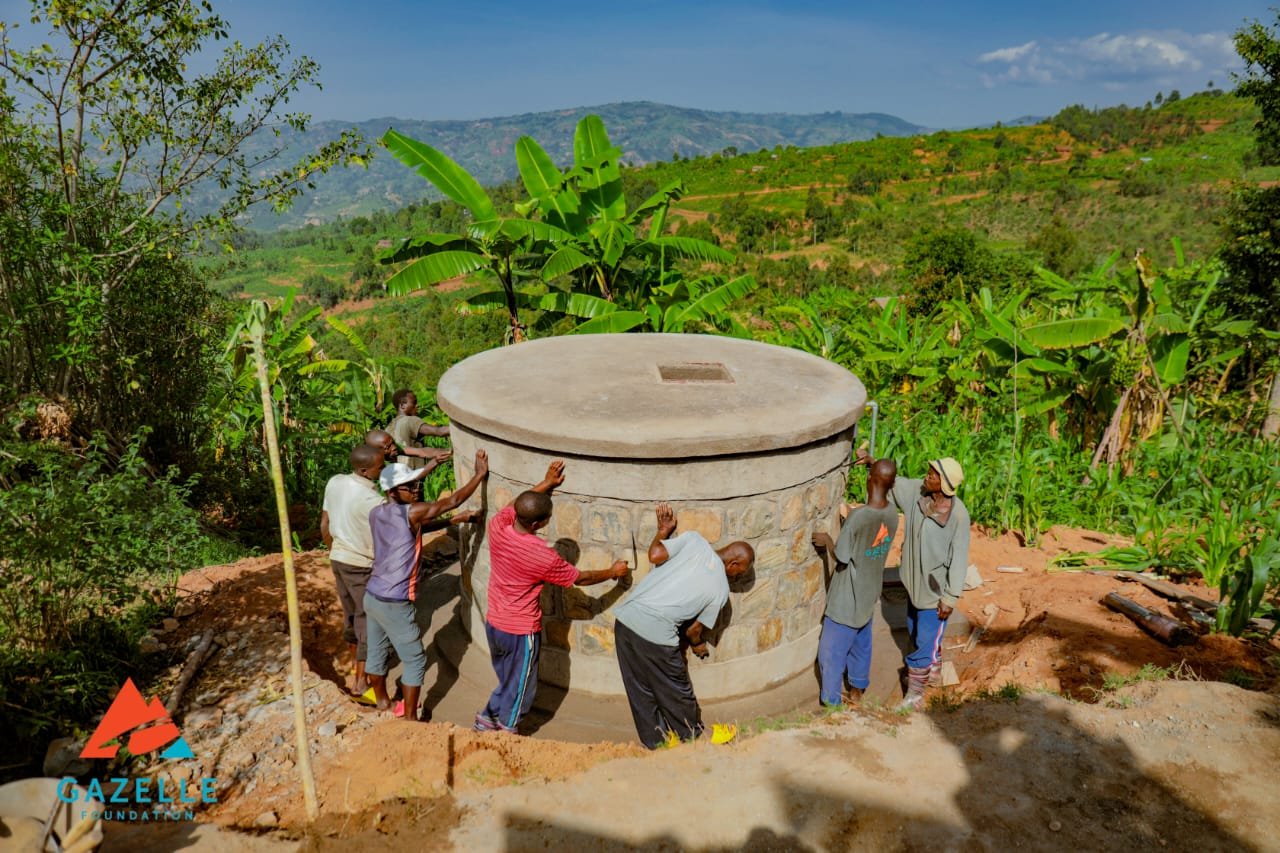
Workers complete final touches on a water storage tank from a recent Gazelle Foundation project. This system uses the same design now being built—helping ensure consistent water supply across the community.
Strengthening What Exists—So It Performs Over Time
This project reflects what we’ve learned: a reliable source, strong design, and local ownership determine whether a system continues to deliver water year after year. Learn more about our impact.
Originally built by another organization, this system is being rebuilt using a proven approach—serving a community of 4,500 people who rely on it.
Because success isn’t just about construction. It’s about performance over time.
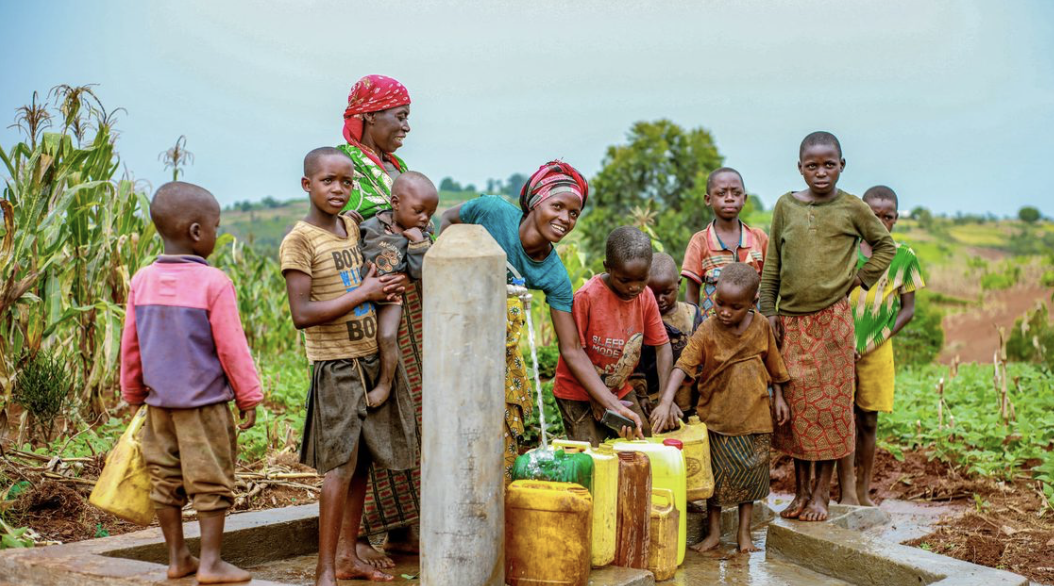
Children and women gather at a tap stand, collecting clean water close to home—safe, reliable, and part of daily life.
What This Makes Possible
For 4,500 people, this system will mean clean water that is safe and close to home.
It means fewer hours spent walking.
Better health.
More time for school, work, and daily life.
Be Part of What Comes Next
There are more communities still waiting for access to clean water. Your support helps move projects from planning to construction—and from construction to water flowing. See ways get involved.
From source → to system → to clean water → to lasting impact.
That’s how clean water moves closer to home—and how communities are served for generations.